Swamp Cypress - Great Autumn Colour
This old 'Swampy' never disappoints when it comes to putting on an Autumn show; belated as it is.
The short clip, below, shows it in all it's glory.
This website is speech enabled. Click on the blue icon, bottom right, to access. The website can be optimised for those with dyslexia.
This old 'Swampy' never disappoints when it comes to putting on an Autumn show; belated as it is.
The short clip, below, shows it in all it's glory.
The World Bonsai Friendship Federation established this international day of celebration to pay homage to bonsai Master Saburo Kato's mission to promote peace and friendship through the art of bonsai.
The day is celebrated on the second Saturday of May each year, which this year is 10-May-2025.!!!
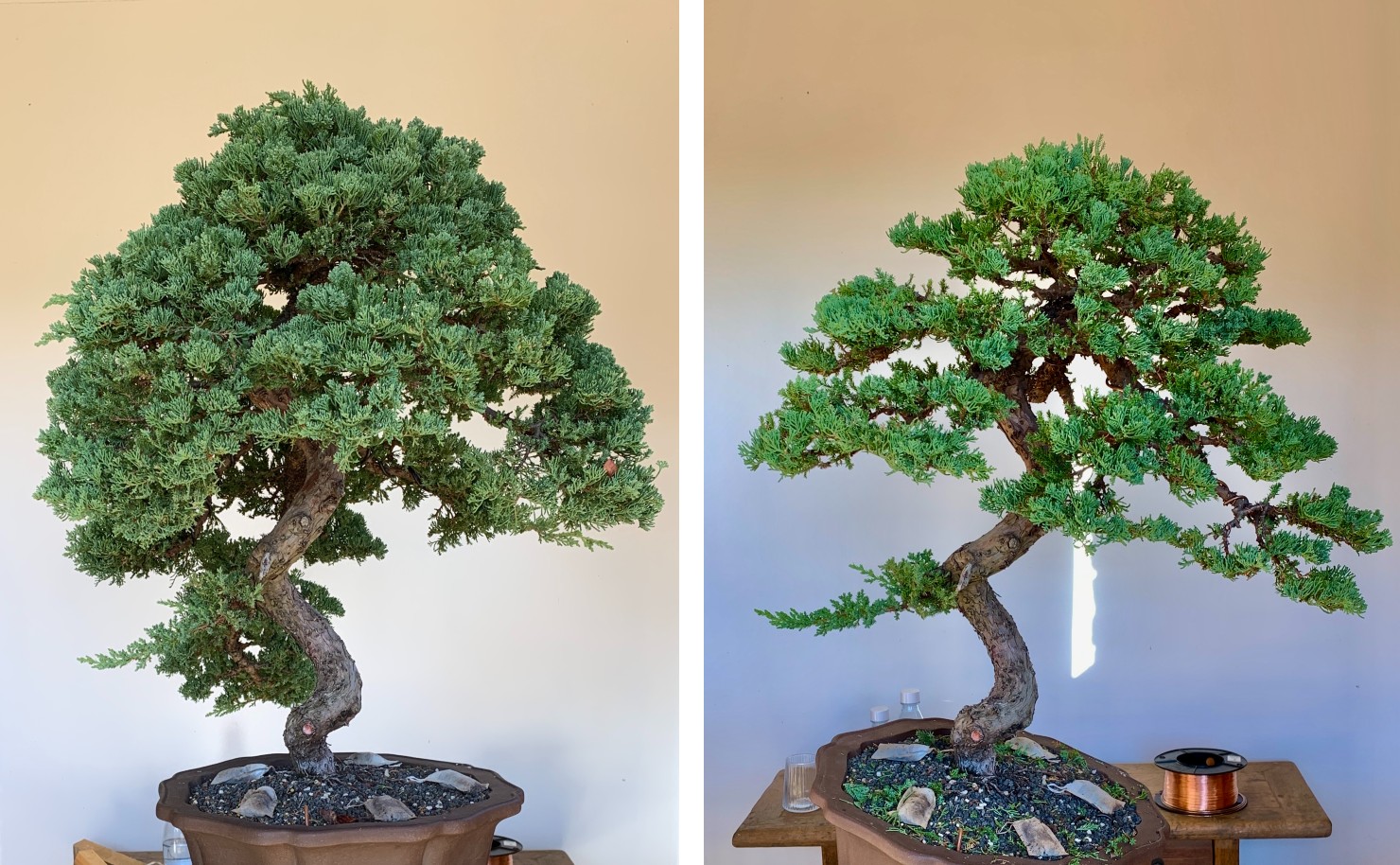
The ongoing refinement of this 'Mikawa' Black Pine continues to be a very pleasing process.
As we all know this process never ends and in this case there is lots to do to reduce the needle size through increasing the ramification. A fortunate characteristic of the 'mikawa' variety is that they bud back on old wood without to much encouragement.
Budda no hiza (仏陀の膝)
The notion of 'Wabi-Sabi' implies, among many other feelings, that perfection does not exist and that the pursuit of perfection leads only to frustration.
Although Wabi-Sabi is difficult to understand and all but impossible to express it can easily manifest itself in the art of bonsai. That feeling you get when you study a bonsai. The old bark expresses a feeling of great age while telling a story of time and the ultimate realisation of the beauty of imperfection and impermanence.
Perfection is only an illusion. The pursuit of 'perfect imperfection' is what drives the art of bonsai.
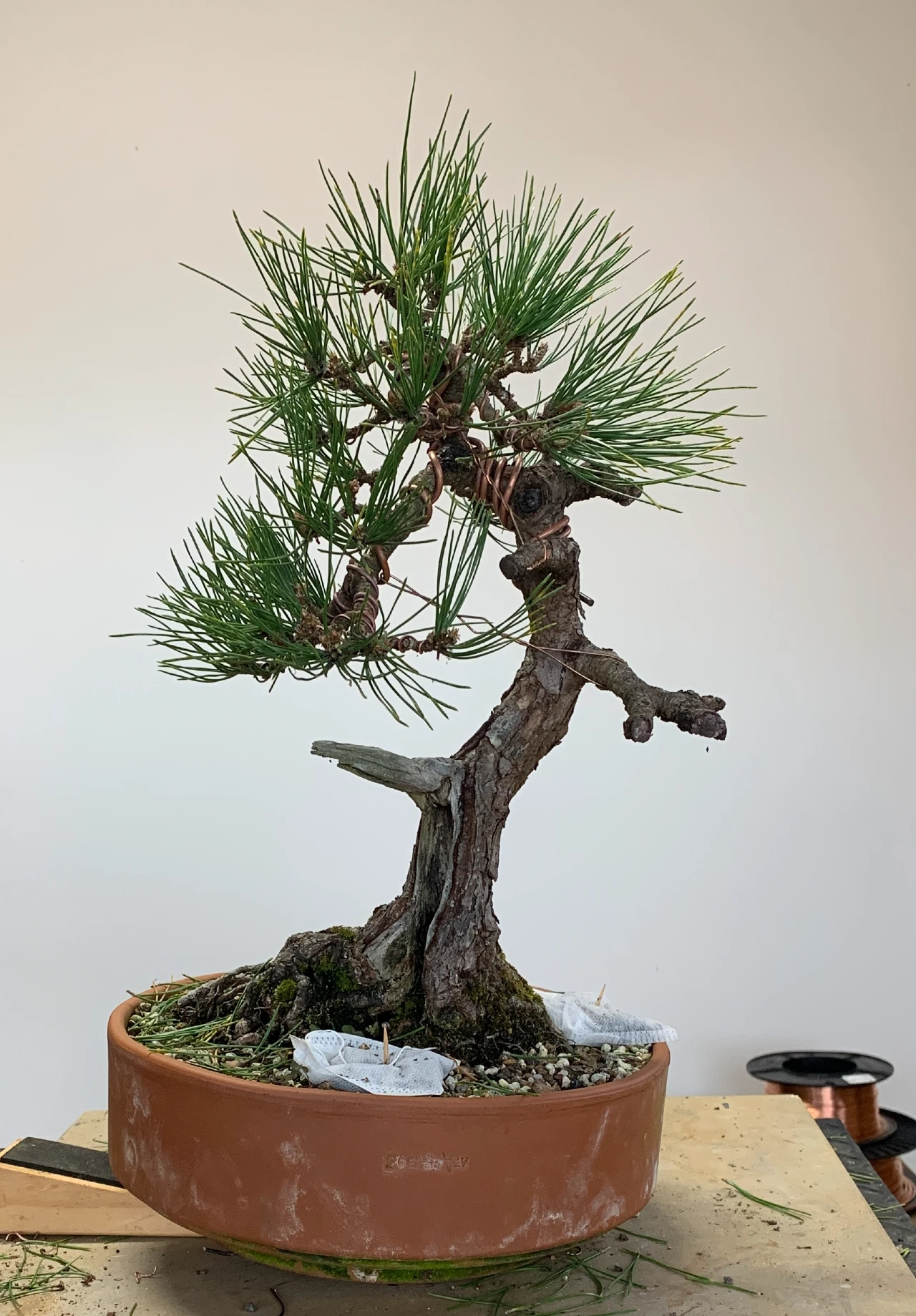
The bonsai in the images here is, to me, a great example of this pursuit and adds an additional level of satisfaction to the art of bonsai.
This old Mikawa Black Pine has just been shortened with the apex bent to the left to give it balance.
As usual for pines this time of the year it has been needle thinned, bud selected and wired. We will be focusing of needle reduction and increasing the ramification next growing season.
At 55 years old from Japanese seed this bonsai was passed into our care, last June, by Ian Hearn who had grown and developed it over this time.
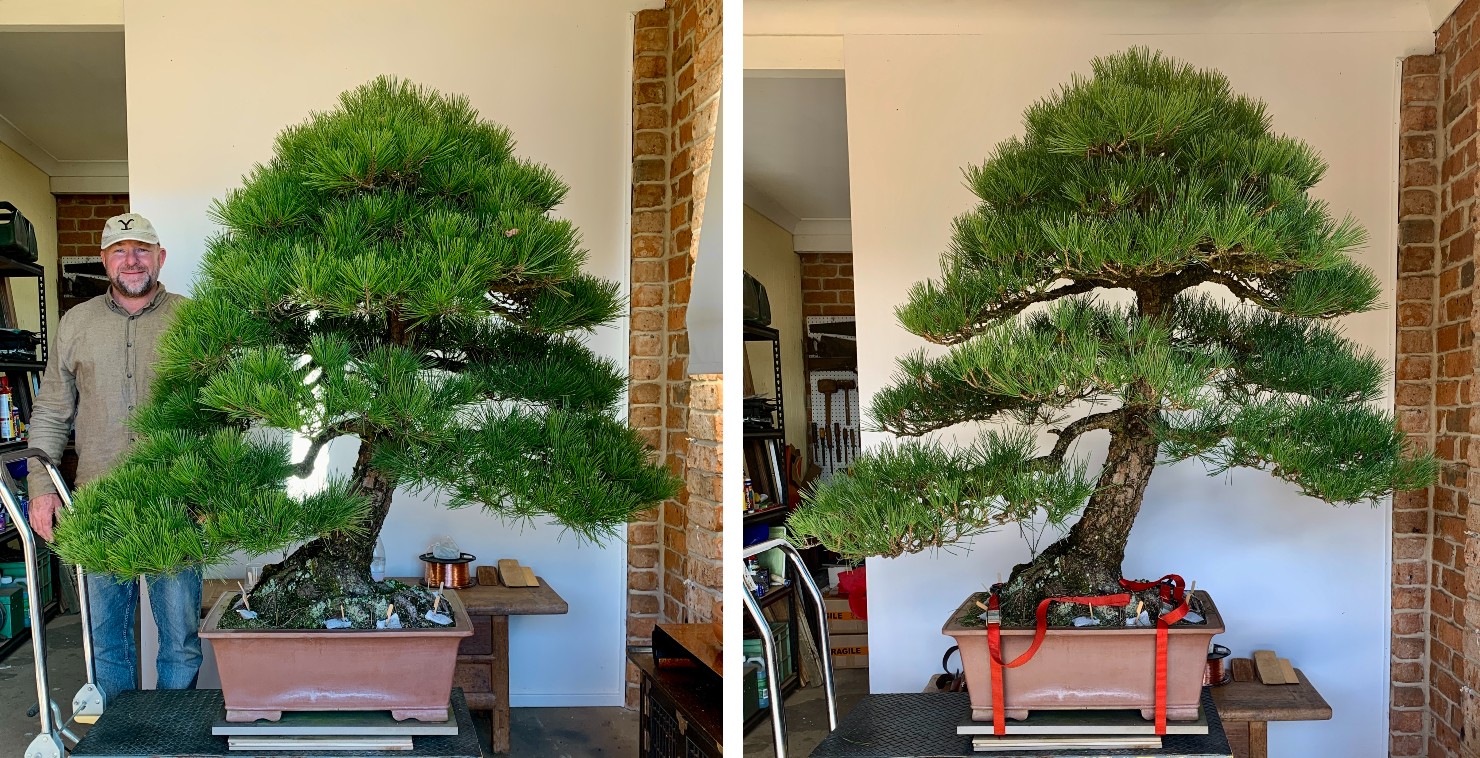
A great way to kick off a bonsai apprenticeship is with this large Japanese Black Pine transformation.!
This was Day1 of a three day 'baptism of fire' for our new 'Deshi' 弟子(apprentice).
Five hours of wiring, notching out, guy-wiring, and bending has resulted in a very rewarding result as well as an invaluable learning experience for our Deshi (Steve).
The ongoing development and refinement of this pine is a satisfying 'genesis' for this bonsai and provides a foundation for further, and never ending, opportunities for Steve to learn and evolve throughout his bonsai journey.
Yoku dekimashita Steve san.!!!
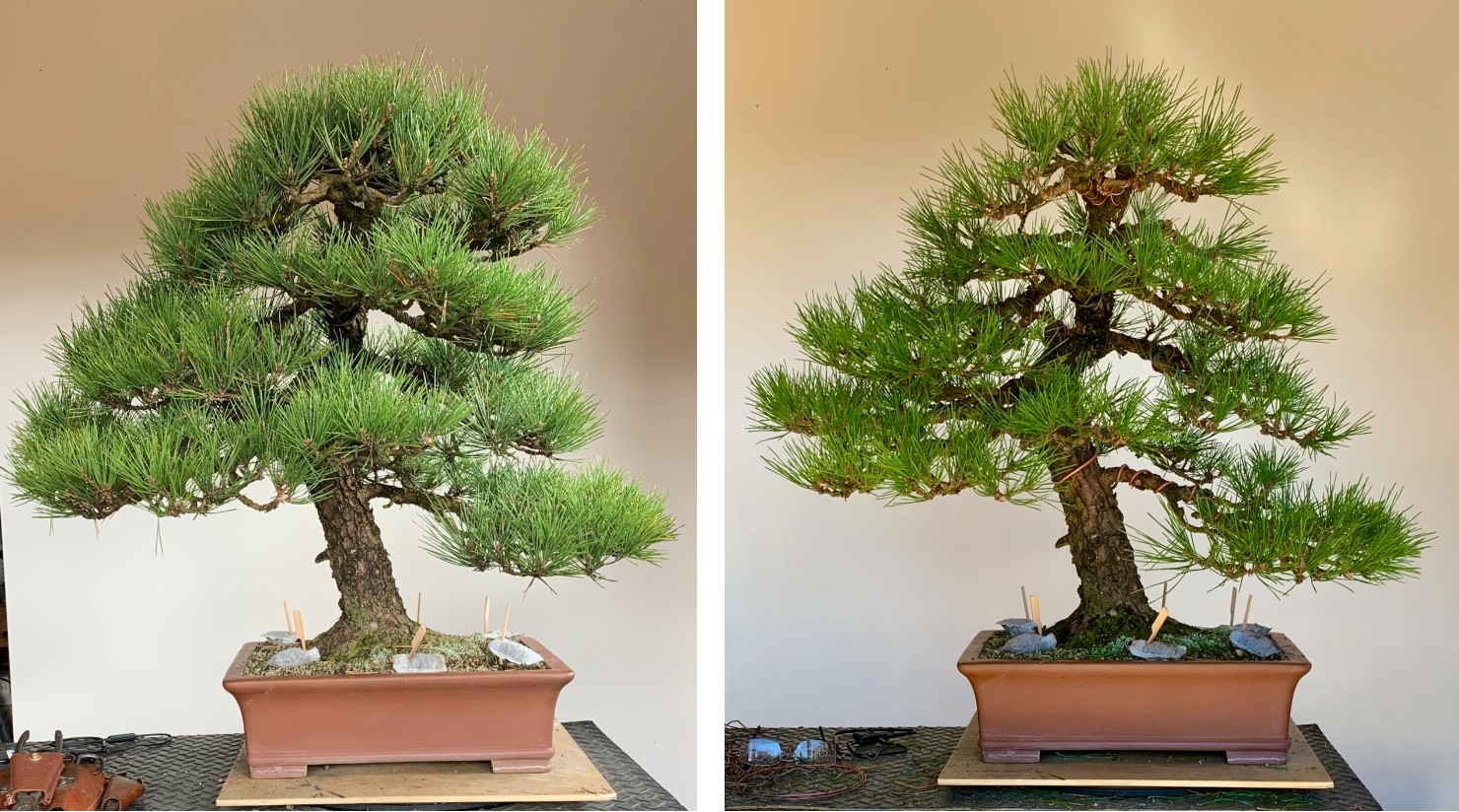
Before and AfterWe have started the most important and time consuming job of all at The Australina Bonsai Gallery, ie, the Autumn/Winter needle thinning, bud selection and wiring of all our black and Red pine bonsai.
No better place to start than on this 1970 Mikawa Black Pine. Not sure about the lower branch.!!! It look a little odd, being on the inside curve of the trunk....... looks out of place... any thoughts about this one..???
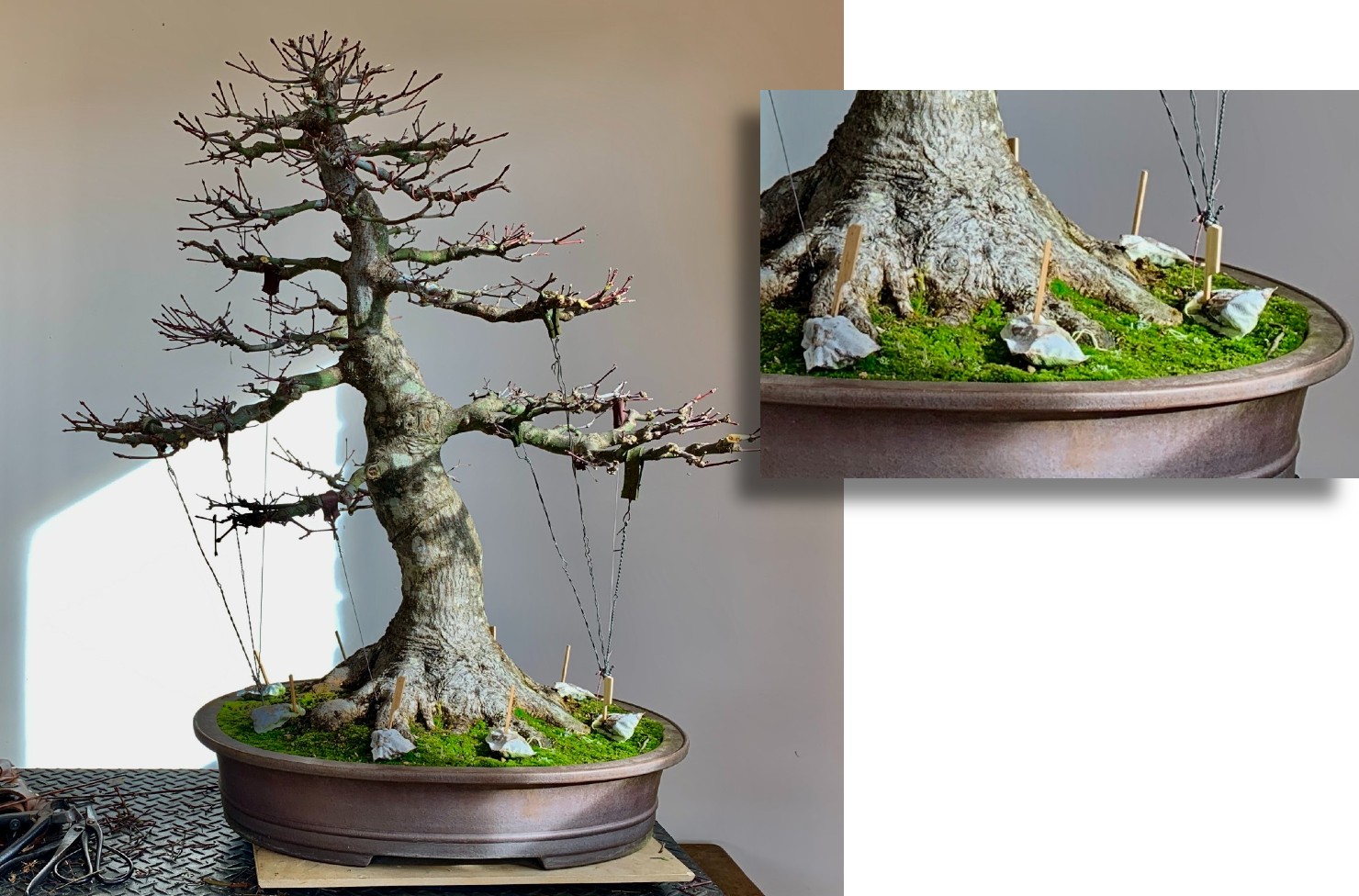
The Trident Maples at the Australian Bonsai Gallery started colouring up about 3 weeks ago.!!
Night temperatures are still reasonably high so don't know why the early colour.???
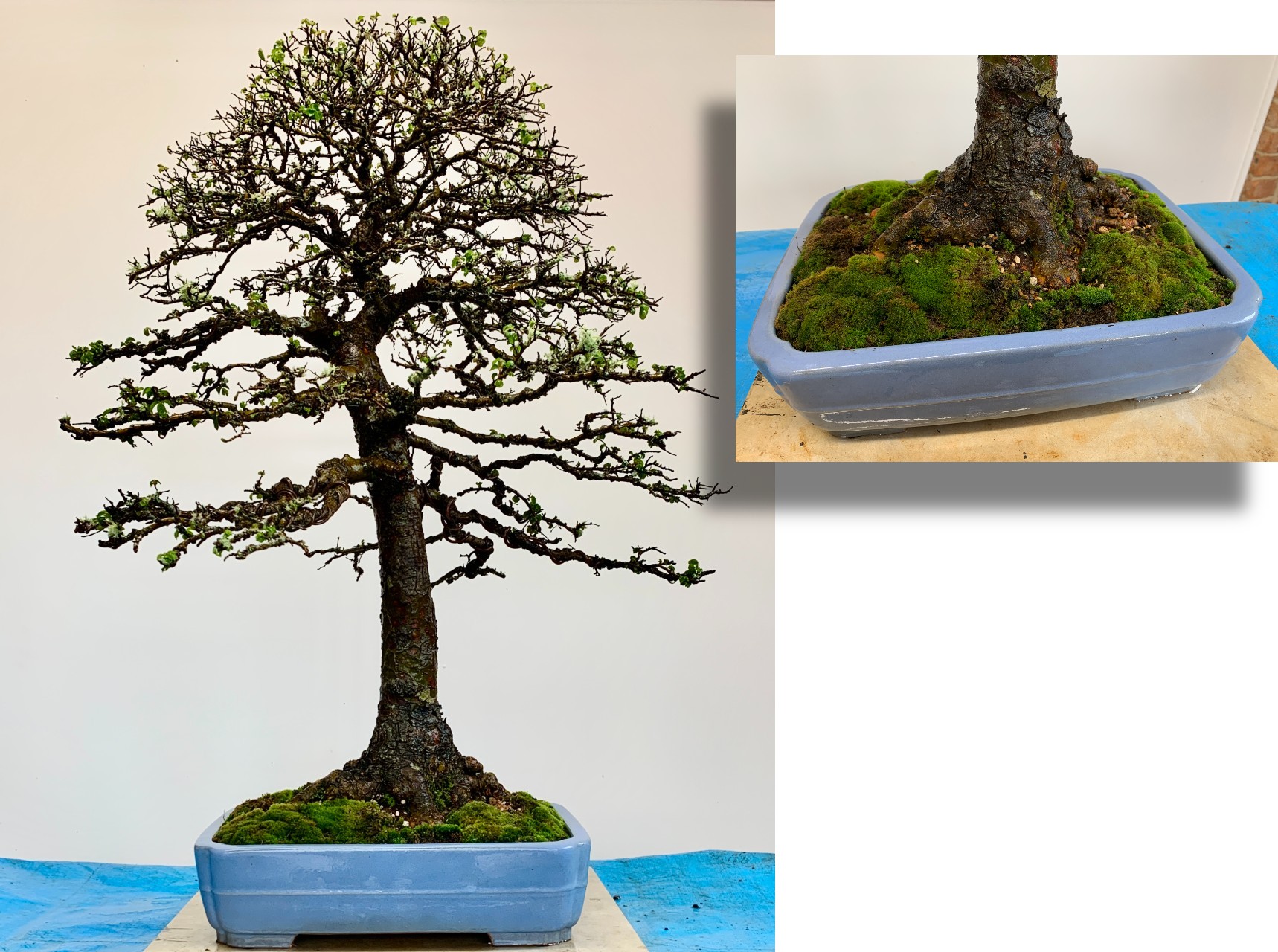
One of our Chinese elms has already lost most of it's foliage as well.!!??
Some time ago I waded into the 'deep end' of the Bonsai Soil Mix debate.
Visitors to The Australian Bonsai Gallery constantly asked about our bonsai soil mix so I thought I would share an article I wrote three years ago on this subject.
Feel free to comment and share your experience.
The health and vigor of the bonsai at The Australian Bonsai Gallery attest to the success of our bonsai soil mixes.
There are no tricky, hard to get ingredients here; most are readily available.
The big question we are often asked:.....
Q.... Do you use the same mix for all species of bonsai.??
A.... You must, firstly, know the characteristics of each ingredient of the soil mix; that is, knowing what they contribute to the health of the tree. Secondly, it is essential to know the horticultural needs of each species and how to match the quantities of each ingredient to the needs of the tree.
A quick example would be say.... a Swamp cypress would require a greater proportion of water holding ingredients than a Japanese Black pine.
Once you have mastered these skills you should be able to water your entire collection at the same time intervals.
Over the past few years Australia has seen higher than average rainfall and the need for a tailored soil mix has never been more important.!!! Over this period we have seen an increasing number of other peoples bonsai that have suffered from soils holding far too much moisture.
Usually the cause is soil mixes high in fine organic matter. This has a dual effect on the tree. Once wet the soil takes far to long to dry out; and, if left to dry out too much the soil becomes 'hydrophobic' and will not take up moisture. Both these effects are terminal for most bonsai.
The following image is a sample tray we have set up for our Bonsai Workshop students. Our students learn quickly how to prepare a good mix for their trees.!!