This website is speech enabled. Click on the blue icon, bottom right, to access. The website can be optimised for those with dyslexia.

    News from The Australian Bonsai Gallery

    Celebrating 50 Years of Bonsai

    The Australian Bonsai Gallery is celebrating a 50 year milestone of bonsai cultivation.

    From our humble and confusing beginnings in 1976 we have been experimenting, failing and learning all aspects of this wonderful art form.  

    Bonsai has now become our 'IKIGAI' (生き甲斐).  A life-long passion of learning and of continuous improvement.

    We have come to realise that the Japanese notions of Ikigai, Ichi-go-Ichie, and Wabi-Sabi are so closely intertwined with the art of bonsai.  The understanding of these notions definitely enriches the understanding and application of bonsai art, design and philosophy.

     Finally we would like to give a big THANKYOU to our many students, and Deshi, for their enthusiasm in allowing us to pass on our knowledge.

    australian bonsai gallery 50 years

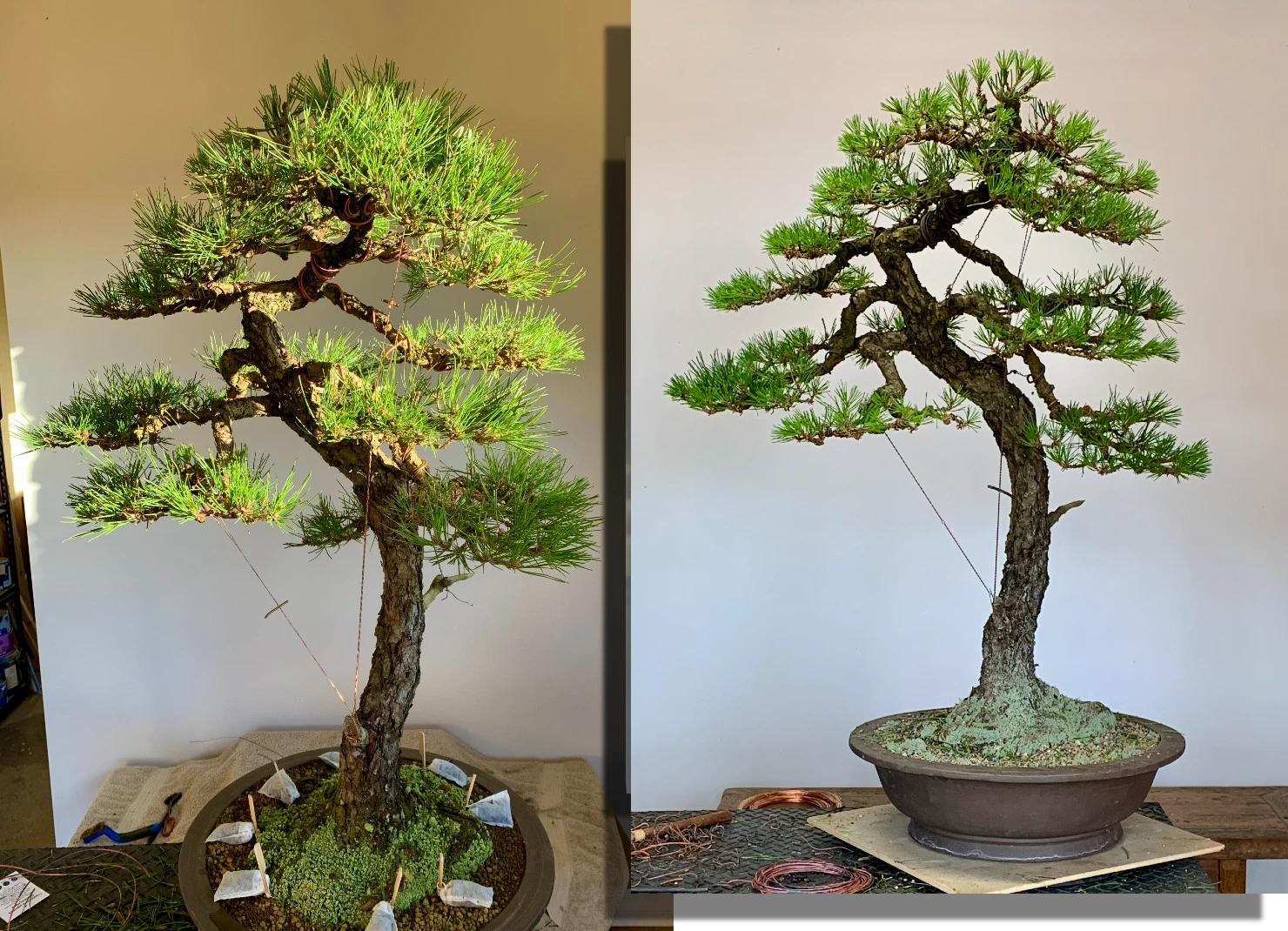
     Summer White Pine Work

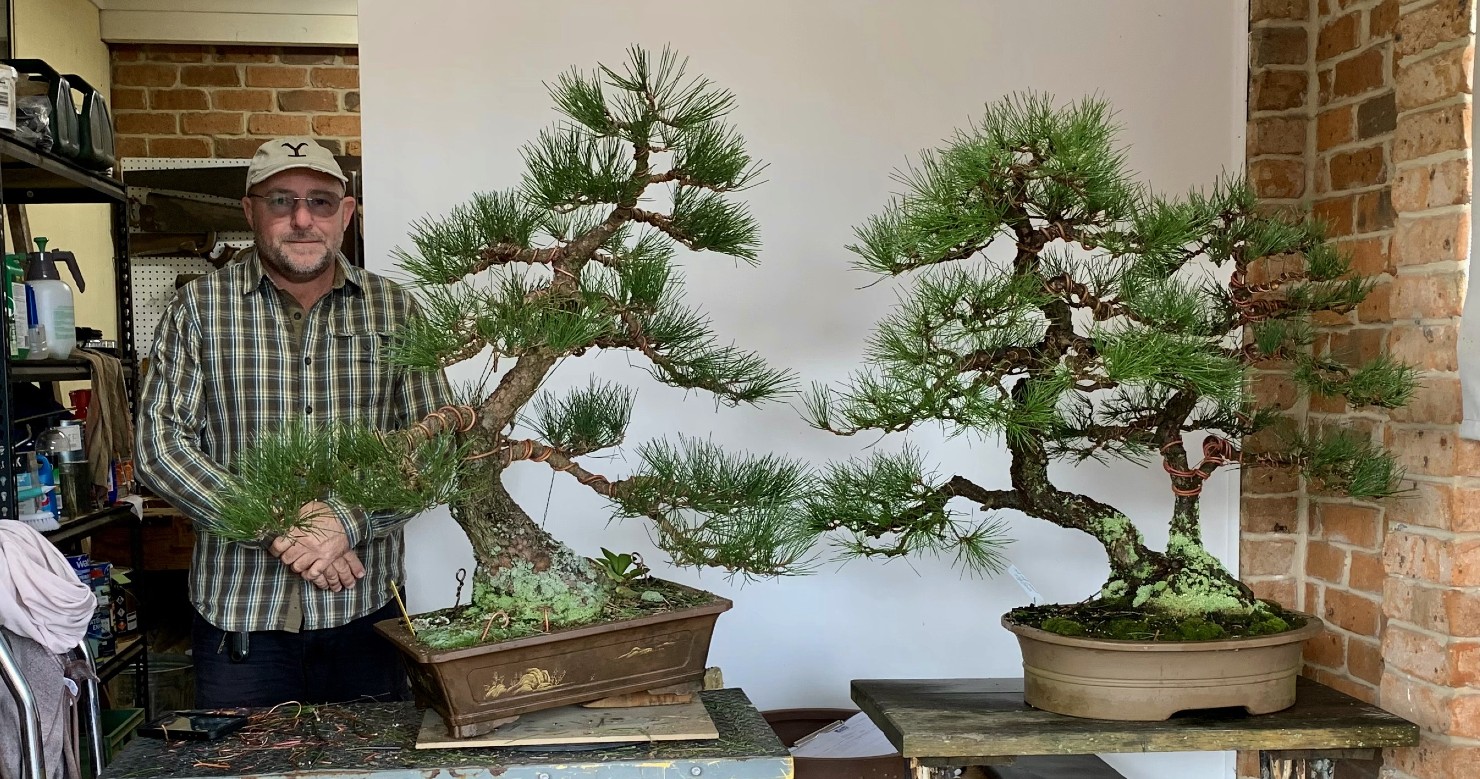
    At the Australian Bonsai Gallery we do most of our White Pine work in Summer after the basil bud sheaths have shed.

    No Spring 'candle shortening' as these white pines are very well branched and produce multiple terminal buds that allows for a simple selection of smaller Summer growth.

    The bonsai on the RHS of the following image is For Sale Here. It keeps getting better and better each season and the price is following this trend.!!!!

    white pine bonsai 2025 12

    Swamp Cypress Summer Pruning

    Just a quick reminder about pruning Swamp cypress to improve ramification.  Always allow the first Spring flush to extend and mature before hard pruning back to around five dormant nodes.

    The following images show three of the collections swamp cypress already pruned as well as our forest planting 'Before' and 'After' pruning.

     For more detail on the results of this technique have a look at a previous article HERE.


    swamp cypress 2025 12 11 summer pruning

    swamp cypress forest 2025 12 12 summer pruned

     Rock Planting Maintenance

    Since posting the following clip to social media I have had many requests for some additional detail on the process of the repair work.

    I have always used a mixture of fine clay (from sieved Akadama) and fine pulverized cow manure. When mixed with water it forms a strong and flexible 'Muck' that I work into the repair area.  It forms a reasonably thick layer for the tree roots to penetrate and 'Air-prune' as they exit the moss layer.  Additionally, the Muck makes a great bed for the moss layer which is pinned in with large copper 'staples'(just visible in the following image RHS).

    This technique works for most species of bonsai from Swamp cypress to Japanese Black Pine.
    forest planting repair


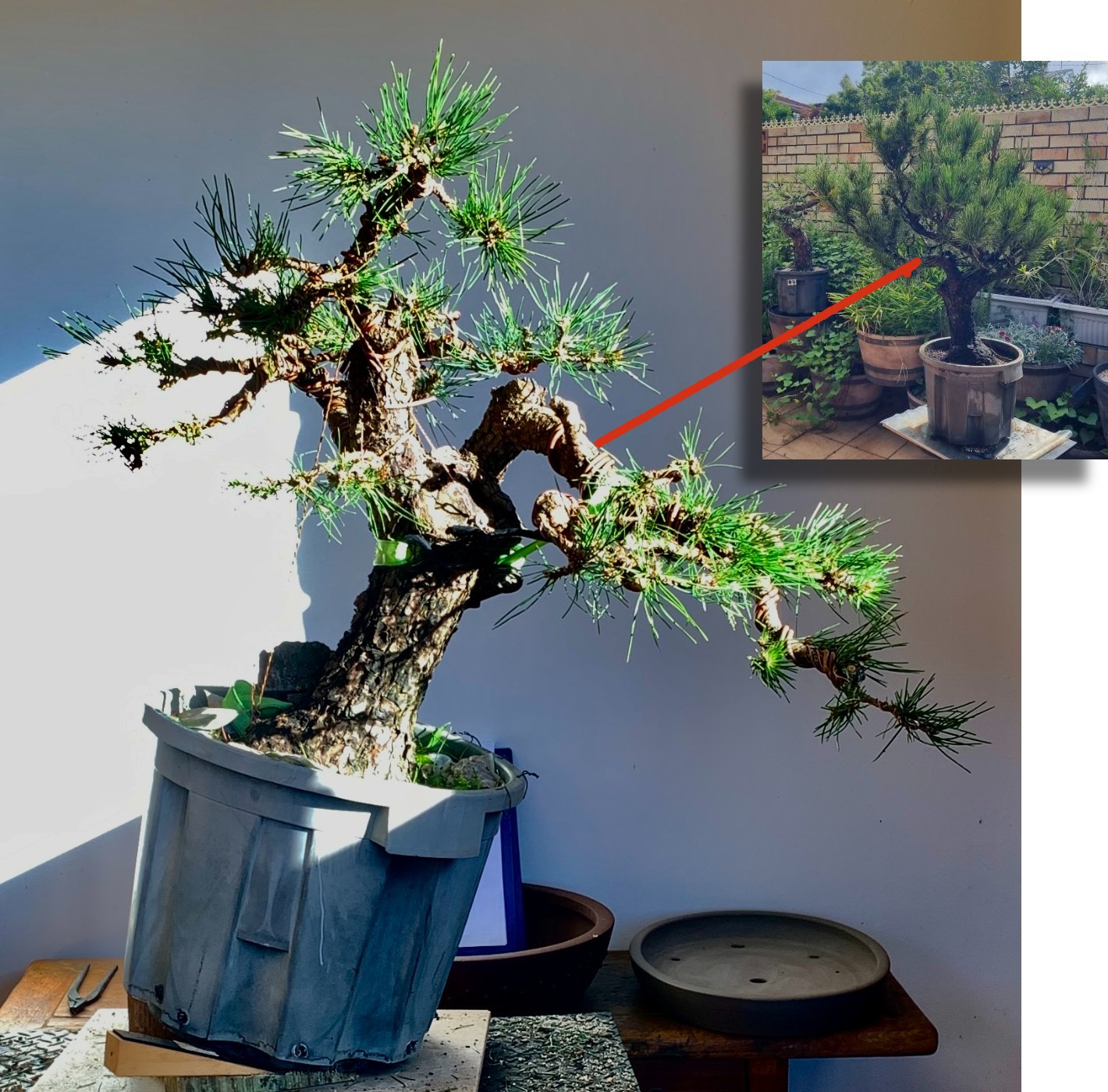
    WARNING Pine Needle Blight

     Pine Needle Blight (Dothistroma septosporum) is a fungal disease that can devastate your bonsai pine collection if not treated early.  Better still it is recommended that preventative measures be taken throughout wet/humid weather.

     A simple application of a copper based fungicide like Kocide Blue (Copper Hydroxide) can prevent infection and spread of the fungus.

    However, the last growing season at The Australian Bonsai Gallery we experienced an extended wet Spring and Summer.  Despite the application of Kocide Blue one of our oldest Black Pines became heavily infected.  We continued to apply the copper spray throughout the season and into Autumn to prevent it from spreading.

    The infection was so serious we did not needle pluck or bud select this bonsai in fear of further weakening it.  Fortunately this bonsai is normally very strong and this season it started to produce a good first flush of un-infected needles.

    As shown in the image below we, finally and out of season, needle plucked and bud selected the tree as well as removing all the infected needles......  Looks like this venerable old tree has made a full recovery.!!!!

    zaidan blight recovery

    Removing First Flush on Pines

    It does not seem to matter how many decades I have worked on pines I always hesitate when it comes to cutting that wonderful bright green Spring flush.!! 

    It seems a shame but knowing how important this task is makes it a necessary part of the refinement of all 'two flush' pines.  Within a few weeks this pine will respond by pushing out multiple second flush buds.

     Our Japanese Red Pines are usually the first to be cut each year followed some weeks later by our Black Pines.

    first flush cut pines

    Spring Flush Trident Maple

    Trident maple bonsai root over rockThis old 'Root-over-Rock' trident maple bonsai was grown from a cutting in the late 1970's.

    One of our favourite bonsai at The Australian Bonsai Gallery.  It spent some time at The National Bonsai & Penjing Collection of Australia (NBPCA) Canberra.

    It is a very important time for most deciduous bonsai.  In particular, for trident maples, as they require constant pinching back to the first node pair every couple of days.  This is the best opportunity to increase ramification.!

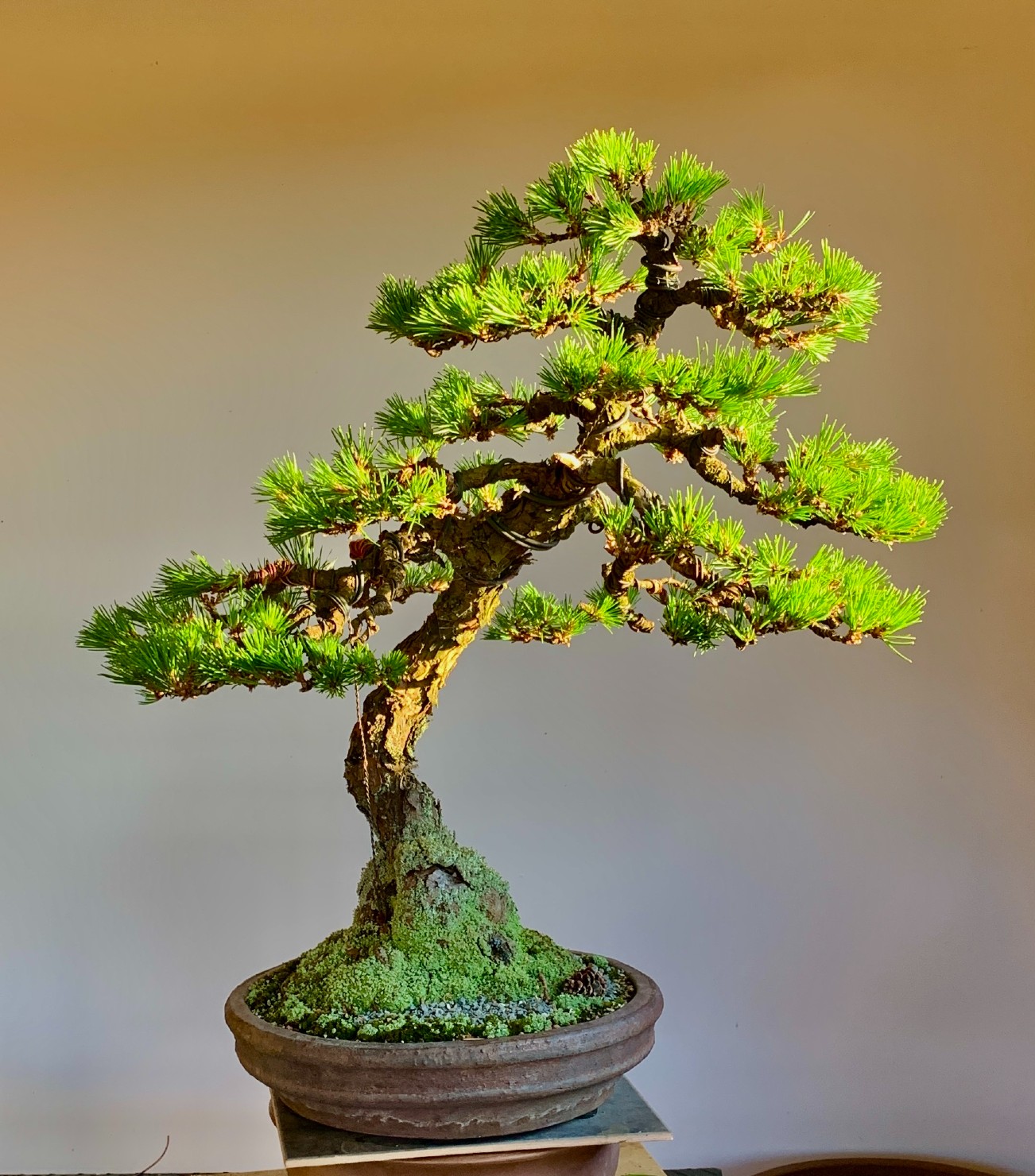
    A New Pot for this Old Pine

    An old saying, that has it's roots in Greek and Roman literature, "cloths maketh the man" rings true in the world of bonsai when you find the 'perfect' pot for that special tree.

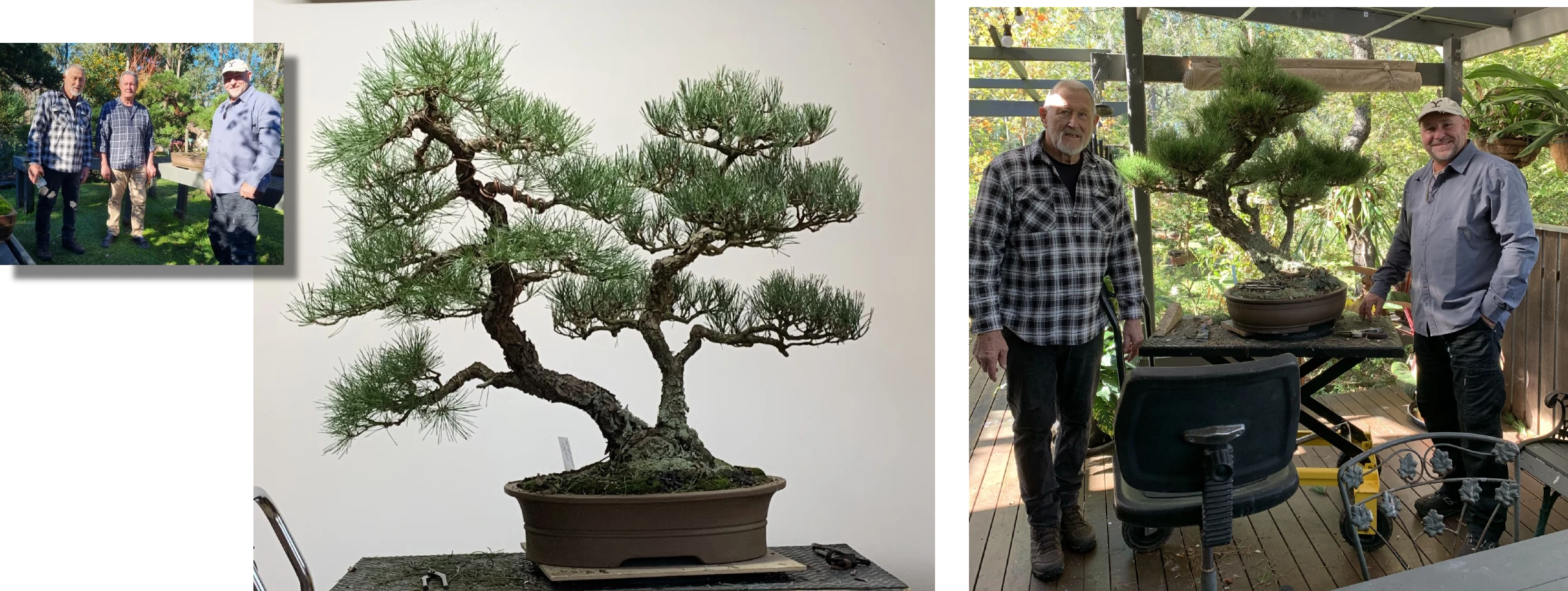
    This is certainly the case here.  After a number of 'pot iterations' this old 'mikawa' Japanese Black Pine has found it's home in this 'nan ban' by Mr.MATSUSHITA Hiroyuki, Reihou kiln;  what I would call a highly harmonious and complementary match.

    Finding that match is not an easy task.  Although there are a number of on-line resources that can help with the search.  I an always searching through the Bonsai Island website as well as the Aussie Bonsai Pot Auction Facebook Page for inspiration and sales.!!!


    japanese back pine mikawa 2025 08 30

    Large Deciduous Bonsai Repotted

     It is satisfying to see so many super fine roots on this trident maple.  Grown from a cutting over 4 decades ago it has developed an impressive nebari and a very stable and fine root structure.  This root structure has enabled it to go back into the same shallow pot comfortably.

    A high percentage of Akadama in the soil mix has contributed significantly to the well ramified roots.  The Australian Bonsai Gallery always use a high quality hard akadama for all our bonsai.   


    large trident maple bonsai repotted 2025 09 04

    The Evolution of an Old Atlantic Cedar

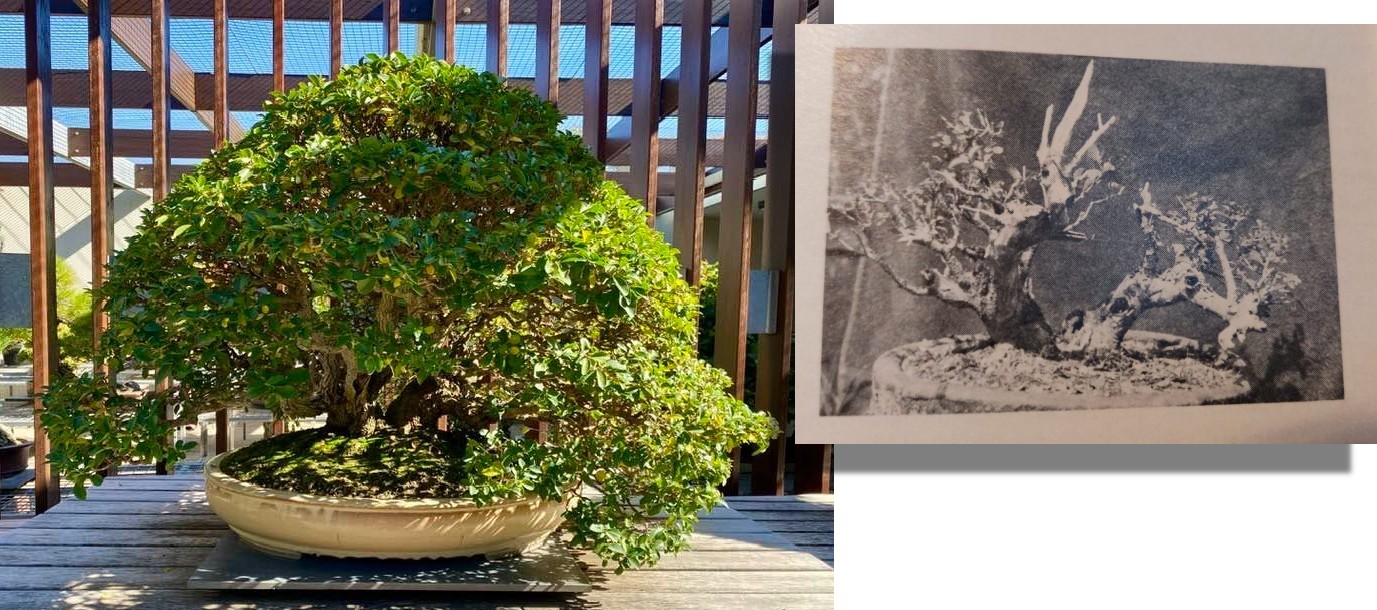
     It is always a delight to look back on the history of the development and refinement of an old bonsai.  

    The history of bonsai in Australia is really lacking.  Bonsai change hands without retaining and passing on the relevant history of the tree.  This results, in many cases, to a de-valuing of old bonsai and robbing future generations of this valuable data.

    These data hold, within their images, an equally valuable chronicle of what can be achieved over time, and with the dedication to the art of many generations of artists.

    A full history of this bonsai can be read HERE.

    old atlantic cedar1984 2025

    Connect with Us